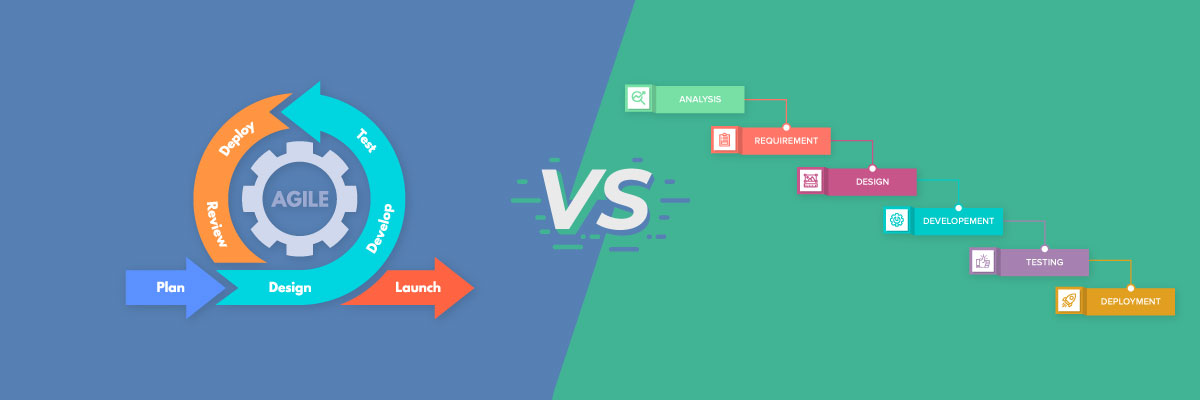
In the realm of project management, two dominant methodologies, Agile and Waterfall, steer the course of initiatives. Gaining a profound understanding of these approaches is crucial for individuals engaged in product development, organizational change, program management, or any structured project.
Agile and Waterfall present distinct paths, each posing a significant impact on the trajectory of a project. Once a choice is made between these methodologies, changing course becomes challenging. While both can coexist within an organization, a project typically adheres to either Agile or Waterfall.
Let’s delve into the fundamentals of each philosophy.
Understanding Waterfall
Waterfall represents the traditional method of project management, characterized by well-defined stages with formalized handovers between them. In this approach, all requirements for each stage must be completed before progressing to the next. A project in a waterfall environment persists until its final release or completion, unless intentionally designed as phased initiatives.
Waterfall discourages a “throw it over the wall” mentality, emphasizing a linear progression from requirements to the ultimate release or project completion.
Unveiling Agile
Agile, a comparatively newer methodology, prioritizes rapid iteration, autonomy, and flexibility. Conceived as a response to perceived drawbacks of Waterfall, Agile divides work into time-based bursts known as Sprints, typically lasting one to four weeks. This cadence guides the completion of work during each Sprint, aiming to deliver value to customers or users swiftly and frequently.
In an Agile setting, product management teams are self-organizing, determining resource allocation and strategies to meet initiative requirements. This approach fosters a continuous feedback loop and supports ongoing experimentation and refinement.
Choosing Between Agile and Waterfall
While ardent advocates of either methodology may argue for their universal applicability, the reality is that different project types align better with one or the other.
Waterfall is well-suited for large, complex projects with specific and unchanging requirements. It facilitates mapping dependencies and structuring comprehensive project plans. However, its rigid structure may limit adaptability and creativity, making it less suitable for more intricate initiatives.
Agile excels in projects emphasizing learning and refining product-market fit. Its speed and flexibility, aligned with continuous feedback, make it suitable for dynamic environments where rapid adjustments are crucial.
Key Differences
Agile and Waterfall diverge significantly in oversight, processes, documentation, and timing. Each methodology has distinct benefits for various teams within an organization.
- Benefits for Different Teams:
- Agile is typically favored by technology organizations for its autonomy and rapid development.
- Waterfall appeals to various departments, offering benefits such as clear, complete visions and less frequent need for training.
Pros and Cons of Agile vs. Waterfall
Both Agile and Waterfall have their strengths and weaknesses:
Agile:
- Pros:
- Flexibility to respond to the market.
- Self-organizing teams and resource allocation.
- Frequent updates and increased customer value.
- Cons:
- Loose planning may lead to unpredictable outcomes.
- Relentless pace may cause fatigue.
Waterfall:
- Pros:
- Minimal scope creep.
- Well-defined roles and responsibilities.
- Predictable final product.
- Cons:
- Lack of flexibility after specification.
- Fewer opportunities for course correction.
Cost Considerations
Neither Agile nor Waterfall inherently incur high costs, but staffing and training are influenced by the chosen methodology. Agile requires specialized roles like Scrum Masters and Product Owners, potentially necessitating hiring and training. Transitioning between methodologies can be challenging, impacting costs.
Product Roadmaps
Regardless of the chosen methodology, product roadmaps play a crucial role. While Waterfall roadmaps offer detailed insights, Agile roadmaps focus on themes and outcomes, aligning with its decentralized model. Purpose-built tools like ProductPlan can facilitate feature-less roadmaps in Agile environments.
Hybrid Models
Organizations need not strictly adhere to a single methodology. Hybrid models, combining Waterfall’s structure with Agile’s iterative bursts, offer flexibility. The choice between methodologies can be project-dependent, allowing teams to evaluate and adapt based on the initiative’s nature.
In conclusion, Agile and Waterfall represent distinct yet valuable approaches to project management. The choice between them should align with the specific needs and characteristics of the project, allowing for flexibility and adaptability in an ever-evolving landscape.